Georgian Walk
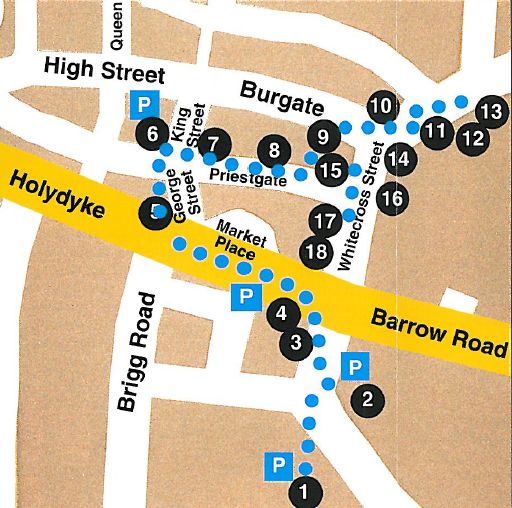
During the eighteenth and nineteenth centuries Barton grew as a small but prosperous market town on the south bank of the Humber Estuary. A number of splendid new houses were built in this period as well as a number of pleasant terraces. This trail attempts to lead the visitor around some of the best of these buildings and the streets in which they stand.
Begin the walk in Baysgarth Park…
1. Baysgarth House
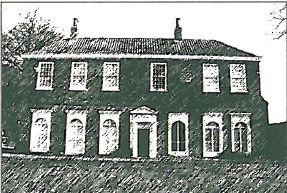
Baysgarth House, which dates from 1731, has undergone numerous later alterations. It was originally built for members of a branch of the Nelthorpe family and was eventually given to the town in 1930. 1t was the centre of a large estate on the southern fringes of the town and is set in some 30 acres of parkland. It now houses a cafe and exhibition hall, and will soon host the local museum. On leaving the park, notice the fine wrought iron gates and the ornate gateposts capped with a unicorn and baskets of fruit. These were brought here in the early twentieth century from the garden of New Hall in Newport.
Head through the gates and onto Whitecross Street. On your right…
2. Bardney Hall
Bardney Hall was built in Queen Anne style. The name is a reminder of medieval Barton’s connection with the great Benedictine abbey of the same name.
Continue along Whitecross Street. On your left…
3. The Volunteer Arms
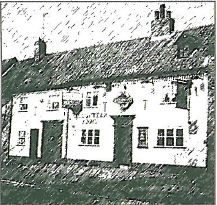
The Volunteer Arms was named after the 320 strong force raised in the town during the Napoleonic War of 1803 – 1814. The dentilled cornice under the eaves is made of bricks set on edge. This feature can be seen on many buildings in Barton and these hand-made bricks were doubtless produced locally at one of the many yards along the Humber bank.
Turn left onto Holydyke. On your left…
4. The Old Mill
The Old Mill, which was built on the site of a pagan Anglo-Saxon cemetery, was described as ‘lately fitted up’ in 1819. It continued in use until about 1950 after which it lay derelict until a more recent scheme of imaginative renovation transformed it into the public house/restaurant we see today.
Continue along Holydyke through the Market Place. Cross the road at the pedestrian crossing and on your left …
5. The George Hotel
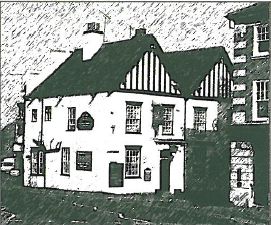
The George Hotel on the west side of Market Place is a former coaching inn, which has undergone many alterations. The main corner building dates from the seventeenth century and it was the venue for many of the great social, political and cultural events which took place in the town.
Now walk down George Street and turn right into Priestgate.
6. 1 – 5 King Street
Look back to view the shops 1 – 5 King Street at the corner of Chapel Lane. This was originally a seven-bay house described as ‘new built’ in 1727. With its tall, steeply-pitched pantile roof, central chimney stacks, sliding sash windows and generally low, squat proportions it is a good example of the local late seventeenth – early eighteenth century style. The rendering obscures good Flemish bond brickwork which, together with the rubbed brick window arches and deep covered plaster cornice, show that it was a house of some distinction.
On your left..
7. Cob Hall
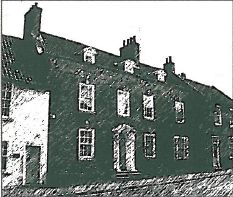
Cob Hall on the north side of Priestgate has a fine frontage with columned doorway. It is dated by the rainwater head to 1766. The initials T.M.E are those of the builders of the house – Thomas Marris, a local solicitor, and his wife Elizabeth. Notice the two fire insurance company plaques on the front and another on No. 26 next door which is for the Pheonix Fire Insurance Company.
Continue along Priestgate
8. Priestgate
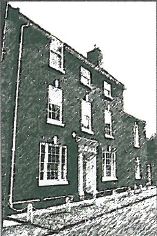
All but one of the houses in Priestgate were built before c.1860, most of them in the Georgian period. No. 4 on the north side is a fine example of a house which dates from the mid-eighteenth century. Notice again the specially cut and rubbed bricks for the window arches, the dentilled eaves cornice and the decorative door case. It was stylish town houses such as these that first introduced the fashion for tall, narrow, three-storeyed buildings. The top storeys of these houses have small windows, though one at No. 4 has been enlarged to light a former schoolroom.
Turn left along St Marys Lane to the junction with Burgate
9. Burgate
At the north end of St. Mary’s Lane is the magnificent medieval church of the same name. The view left along Burgate shows the imposing three-storeyed range built by William Mackrill in 1806. The Mackrill family owned one of the earliest brickyards as well as boats in which the bricks and tiles were shipped away to builders in the Humber basin and as far away as East Anglia and London.
Turn right past the church and follow the road around to the left onto Beck Hill
10. The Beck
Formerly a most prominent feature of the Barton street scene was the Beck. Artesian springs feed this pond and in recent years, massive water extraction from the North Lincolnshire aquifer caused the springs to dry up for long periods. The closure of some of the Scunthorpe steelworks resulted in the springs beginning to run again, and thanks to the efforts of Barton Civic Society the Beck is now a pleasantly landscaped area again. When full there is an impressive reflection of the church.
Cross the road and walk up Green Lane
11. The Old Vicarage
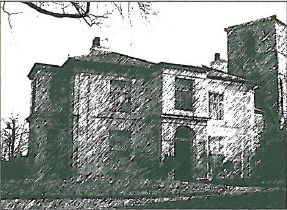
Across the road and to the west of St. Peter’s Church stands The Old Vicarage, a building substantially remodelled in elegant Regency style early in the nineteenth century. Chad Varah, the founder of the Samaritans, was born there in 1911.
Continue along Green Lane. On your left …
12. St Peters Church
Although not Georgian, without doubt, Barton’s most significant building is St. Peter’s Church. The tower and baptistery at its western end remain from an Anglo-Saxon church built around 1000 AD. In the later medieval centuries the building was enlarged. It is now in the care of English Heritage and is currently open to the public (please check times with English Heritage).
Turn left at the end of the church and exit the church yard via the steps. Immediately on your right …
13. Tyrwhitt Hall
To the east of the church lies Tyrwhitt Hall. The later brick exterior of this court-yarded house conceals a complex building dating from the fifteenth century or even earlier. Its north wing is a magnificent timber-framed open hall whilst the south wing, built of chalk and brick with heavy oak timber framing, contains the range of chambers or private rooms used by the household. Please note that Tyrwhitt Hall is a private residence and you should respect the privacy of the owners. The Hall is sometimes opened for tours during the Heritage Open Days in September.
Head back along Beck Hill to the junction with Whitecross Street
14. Whitecross Street
Returning to Whitecross Street one enters that part of Barton which displays to good effect the evidence for Barton’s prosperity as a flourishing market town in the eighteenth and nineteenth centuries. Here can be seen a mixture of building styles and sizes – an essential feature of the older parts of the town which contrast with the more uniform suburban developments of the last hundred years.
Walk along Whitecross Street. On your right…
15. 55 – 57 Whitecross Street
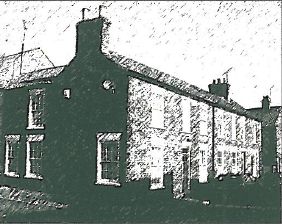
The row of houses Nos. 55 – 57 were built in a local style and have yellow and brown bricks laid alternately in Flemish bond which give a chequer board effect. Notice particularly how the original windows with small panes and glazing bars blend in well with the proportions of the facade and the pattern of the brickwork.
On the opposite side of the road …
16. Laurel House
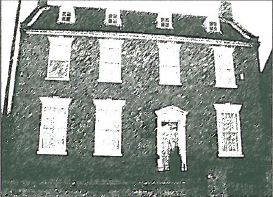
On the opposite side of the road stands Laurel House which was built in the 1780s for a local surgeon, William Benton. The front has fine Flemish bonded brickwork, a dressed stone gable, dentilled cornice and ornate doorway.
Returning to the west side…
17. 51 Whitecross Street
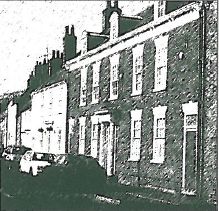
Returning again to the west side of the street one sees No. 51 whose frontage dates from the early nineteenth century. Behind are ranges at right angles dating from the previous century and, earliest of all, the rare survival of an interior timber-framed wall of the sixteenth or seventeenth century.
Further along …
18. 41 Whitecross Street
Further up the street stands No. 41, a mid-to late-Georgian house with a steeply pitched roof, a parapet in front with a moulded plaster cornice at eaves level, and a doorway flanked by fluted Doric columns. The bay windows were Victorian additions.
Continue along Whitecross Street, across Holydyke to return to Baysgarth Park