Victorian Walk
During Queen Victoria’s reign (1837 – 1901) Barton’s population nearly doubled. There were tremendous economic and social changes, and these are reflected in the wealth of Victorian public and private buildings which remain as a legacy of the period.
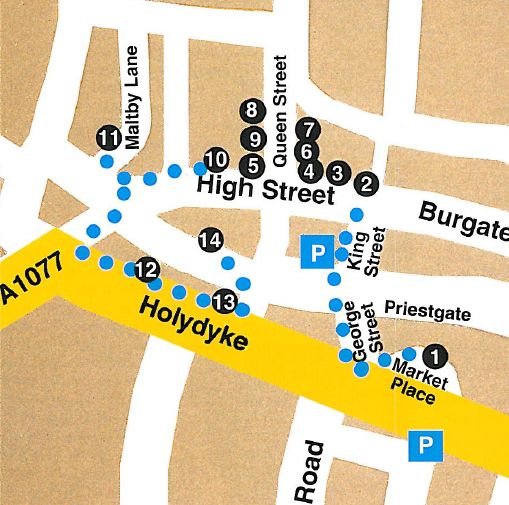
Begin the walk in Barton Market Place..
1. The Corn Exchange
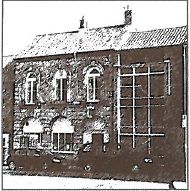
The Corn Exchange Club was designed by D.W. Aston of Hull and opened in 1854. The ground floor, which originally had cast iron grilles in its three arched openings, was a butter market. The building still retains some fine details – pilasters with elaborately carved Corinthian capitals and much decorative, rusticated, yellow brickwork.
Head toward the George Inn and turn right along George Street. Continue along King Street to the T-junction with High Street and Burgate
2. Elm Tree House
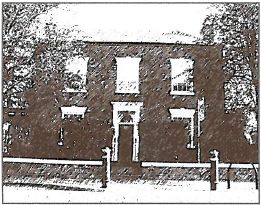
Elm Tree House was built by George Ingram, a local brickyard owner, in about 1843. Notice the high-columned porch and the fine keystones above the windows.
Turn left along High Street
3. Police Station
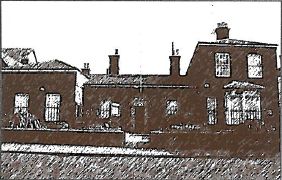
The Justices of the Peace for Lindsey decided to build a Police Station and Magistrates’ Court in Barton in 1847 – see the inscription over the central doorway. It was built on the foundations of a great mansion house built by the Long family of London mercers. As designed by J.S. Padley, the building was single storied, the court room being on the right and the living accommodation for the constable on the left. An office, kitchen and two cells occupied the centre of the block. It was built of local brick, but was given a Welsh slate roof. There are sandstone surrounds to the central sash windows and to the arched entrance. However, not long after completion, the building was heightened and the interior rearranged. The constable’s house was moved to the right and was given a second storey. In the early 1960s the superintending constable’s house was adapted to provide office space. The last case was heard in the Magistrates Court in July 1995. The Police Station was relocated in 2005, and the premises is now used by a veterinary practice.
Continue along High Street
4. Oddfellows Hall
In 1864 the Barton Good Design Lodge of the Odd Fellows Friendly Society opened their new Hall on the corner of Queen Street and High Street. Built in Italian Renaissance ‘palazzo’ style it cost some £1000 – proof, if it were needed, of the strength and popularity of such self-help societies in Victorian Barton. The large upper hall, used for meetings and concerts, lay above a number of offices and flats. During the twentieth century, the hall was used as Barton’s first cinema, a repertory theatre, a roller-skating rink, a dance hall, and finally as government offices. The ground floor and rear wing are now entirely residential accommodation but the hall remains unused.
Turn right into Queen Street
5. Queen Street
Queen Street, originally known as New Road when it was opened in 1827, is central Barton’s most recently created thoroughfare. It cut across the garden of the great house which formerly stood on the site of the old police station. The grounds originally occupied most of the area bordered by High Street, Finkle Lane, Newport, Catherine Street and Marsh Lane. Plots of land on either side of the new road were sold to house builders and some of the various interest groups that flourished in Victorian Barton – the Odd Fellows Friendly Society, Barton’s Temperance Group, the Primitive Methodists and the local educational lobby. The result of all their efforts is a street graced by a collection of public buildings of regional, if not national, importance – a group which the Barton Civic Society is keen to retain in its entirety.
On your right..
6. Joseph Wright Hall
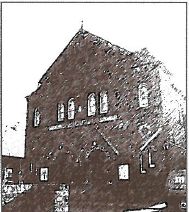
In 1810 the Methodist Movement split and the Primitive Methodists were founded. In early 1867 the Barton ‘Prims’ laid the foundation stone for their new Primitive Methodist Chapel on the site they had acquired on the east side of Queen Street. It was opened by Christmas of that year and was capable of holding 600 worshippers. It had cost some £1,500 to build in a ‘Romanesque-style’ to a design by the architect Joseph Wright of Hull. It ceased to be a Primitive Methodist Chapel in 1961 and was reopened as the Salvation Army Citadel in 1965.
Continue along Queen Street
7. Wilderspin School Museum
On 1 April 1844, the Vicar of Barton, the Rev. George Uppleby, formed a committee to establish a National School for the children of the town’s poor. On 24 June 1844, land was purchased for £250 on the east side of Queen Street.The school was built in neo Tudor style of red brick with stone dressings to a design by the architect William Hey Dykes Jnr of Wakefield at a cost of £846. It opened in January 1845 (only nine months after the committee was established!) and originally had three rooms, one for 150 boys, another for 150 girls and a third for 100 infants (two to six year olds). The first superintendent was Samuel Wilderspin who has a national and international reputation as the founder and chief promoter of the education of infants in England and Scotland. He had great influence in the development of infant schools in Europe and many other parts of the world. The school was extended in 1935 and closed in November 1978 when the newly-built St Peter’s School was opened in Marsh Lane. It is now the nationally acclaimed Wilderspin School Museum.
Across the road..
8. Longs School
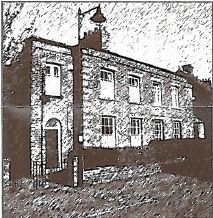
A pair of Victorian Houses, 13 and 15 Queen Street, stand on the site of the former Free Charity School known as Long’s School or the British School. The Rev. George Oliver laid the school’s foundation stone in 1831 and also present were Masons from the Apollo Lodge in Grimsby and the Humber and Minerva Lodges in Hull. The school was opened on the Coronation Day of William IV (12 September 1831) as a non-denominational school conducted on liberal principles. By 1832 over 100 boys and girls attended either as free scholars or on payment of between 1d and 6d a week. On 20 January 1832 Isaac Pitman, then 19 years old, became master of the school but after his marriage to Mary Holgate in 1836 he left Barton. He was actually working on his system of shorthand whilst he was living in Barton. In 1842, for reasons unknown, the school closed and in 1858, after being extended and re-fronted, the building was converted into the two houses which are today numbers 13 and 15 Queen Street.
Turn around and head back towards High Street
9. Assembly Rooms
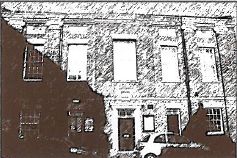
The Assembly Rooms was originally a Temperance Hall, built in 1843 on the western side of Queen Street. A Temperance Society was founded in Barton in 1837 intending ‘to preserve the sober and reclaim the drunken’. With the support of the local Rechabite Friendly Society it purchased a plot of land and erected the large hail at a cost of £700. The two-storied, red brick building is in a classical style with a symmetrical five-bayed front which has a central pilastered Doric doorway. The upper lecture hall could seat 400 people and was used for public meetings, public inquiries, county court meetings, concerts and exhibitions. In 1903 it closed as a Temperance Hall and between 1906 and 1967 it was the Anglican Church Hall and the main public hall in the town and became known as the Assembly Rooms. In 1974, it was converted into a night club which ran for only a short time. In 1976, Glanford Borough Council acquired the building and for a number of years operated it as the town’s civic hall. In 1991, it was taken over by the Town Council whose efforts have brought it back to life and created a most important amenity available for public and private functions.
Turn right back onto High Street
10. 26 – 28 High Street
Numbers 26 to 28 High Street were built in the late nineteenth century. Today an office and a restaurant occupy the ground floors but above can be seen five round-headed windows. Between each of the two pairs of windows there are Romanesque-style shafts, an example of the Victorian practice of using architectural features from abroad or from historic periods.
Continue along High Street to Junction Square. Turn right here and then right again into Maltby Lane
11. The Hub
The Hub occupies the premises of the former Wesleyan Day School built in 1867. In 1860 Barton’s Wesleyan Methodists decided that because of the overcrowding in the Queen Street school they would build a new, larger school of their own to replace their small one which stood on the site of the present Methodist Lecture Hall. The new school in Maltby Lane was large and successful and ,in 1881, the school log book recorded that there were “299 present this afternoon.We have had today the largest school that has probably ever been held in Barton.” The school received good reports from the inspectorate but struggled financially. In 1891, the fees were reduced to 1d per week. The master from 1893 until 1914 was Arthur Loughborough, and his excellent work was recognised in 1903 when he was elected a member of the new Education Committee of Lindsey County Council. In 1915, the County Council School was built in Castledyke West. Mr Loughborough, along with his staff and pupils, were the first occupiers of the building. After a short period of redundancy, part of the the Maltby Lane building was occupied by the Salvation Army (who ran it as their Barracks) from 1921 until 1962. The building has also housed the town’s Employment Exchange, Boys Club and Public Library and is currently Barton Youth Centre.
Return to Junction Square and turn right onto Hungate. At the roundabout turn left along Holydyke.
12. Providence House
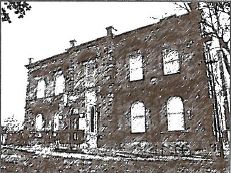
Providence House was built in a heavy neo-classical style in 1854 for Thomas Tombleson, one of Barton’s largest landowners. After it ceased to be used as a family home it was first used as an orphanage run by the Lincolnshire branch of the National Children’s Home and then as an annexe to the local school and latterly as the public library and adult education centre. It was extended in 2006 and has now been converted into flats.
Continue along Holydyke to Vestry Lane and turn left.
13. Trinity Chapel
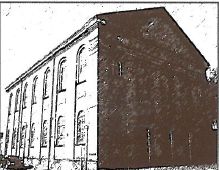
The Trinity Methodist Chapel is the third Wesleyan Methodist chapel to be built in Barton and was opened in 1861. It replaced a previous chapel built on the site in 1816 and which was variously enlarged in 1839 and 1849. As headquarters of the local Methodist Circuit it was necessary to provide a building capable of holding very large congregations and so the enormous building was constructed. Later, in 1902, a Hall and Sunday School were added to the south, facing onto Holydyke.
Ahead of you on Chapel Lane
14. 8 – 24 Chapel Lane
The houses in the Chapel Lane Terrace (Nos 8 – 24) are typical of a style popular in the period between about 1875 and 1914. They have decorative fanlights and lintels, and well-designed bay windows and brickwork. No. 12 has columns and decorated archways above the passage and doorways.
Turn right along Chapel Lane and right again onto George Street to return to the Market Place